Weddings
The wedding as film — three lessons in silence
I had a couple — Iren and Ivan. Before we started, we sat at the table in their Burgas apartment and talked for two hours. Not about light, not about dresses, not about gifts. We talked about silence.
People think a wedding is a three-to-four-hour performance: the exchange of rings, the kiss, the first dance, the toasts. That's the wedding everyone shoots. But the real day is eight hours of life around that performance — and that's where the story lives.
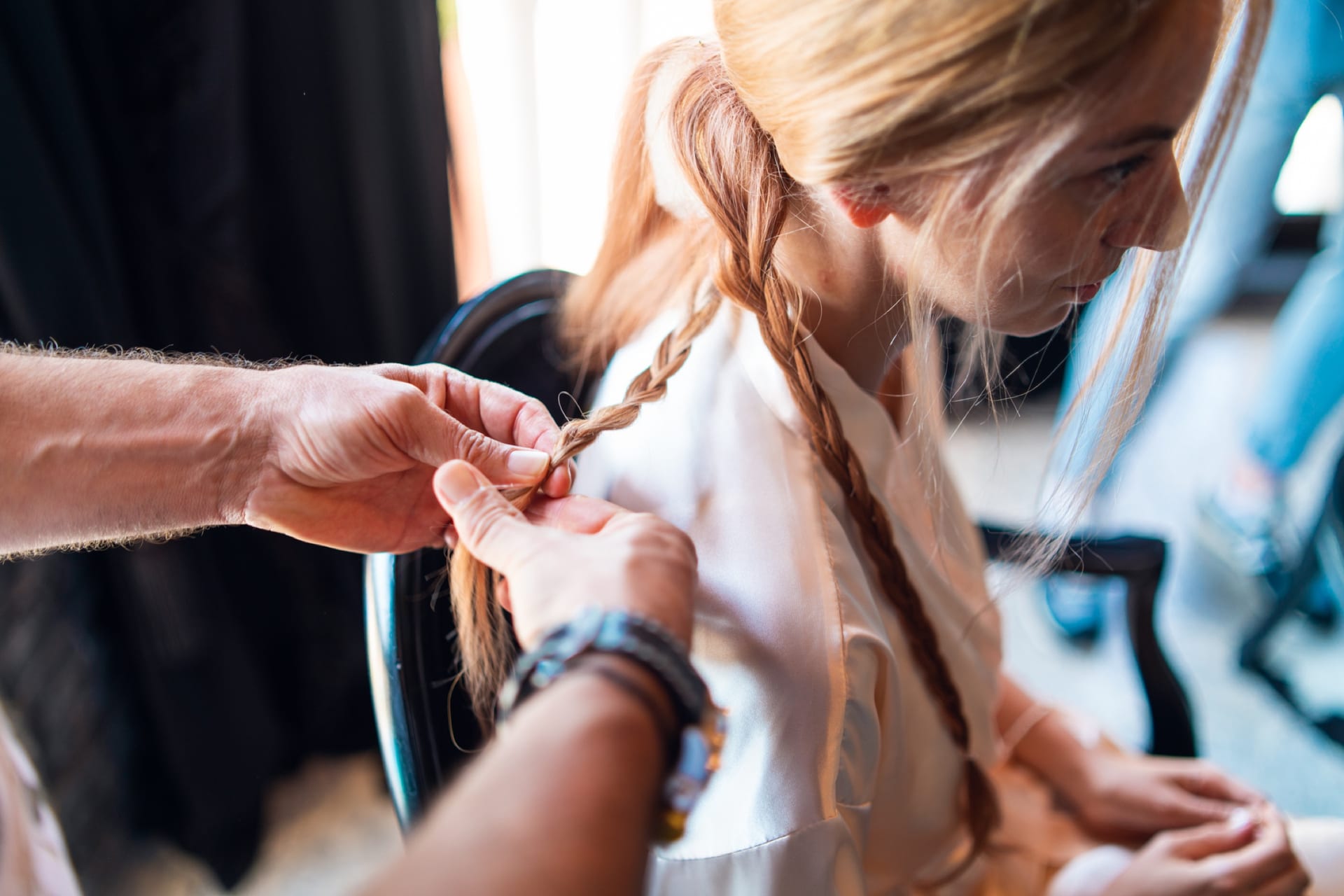
Lesson one: arrive early. An hour before the announced time. I walk in without the camera around my neck, carrying it in the bag. I have coffee with the bride's mother. I watch nine men get dressed in the next room. I figure out who will cry, who will laugh, who will hide. When I finally pull the camera out an hour later, nobody reacts — it's already part of the room.
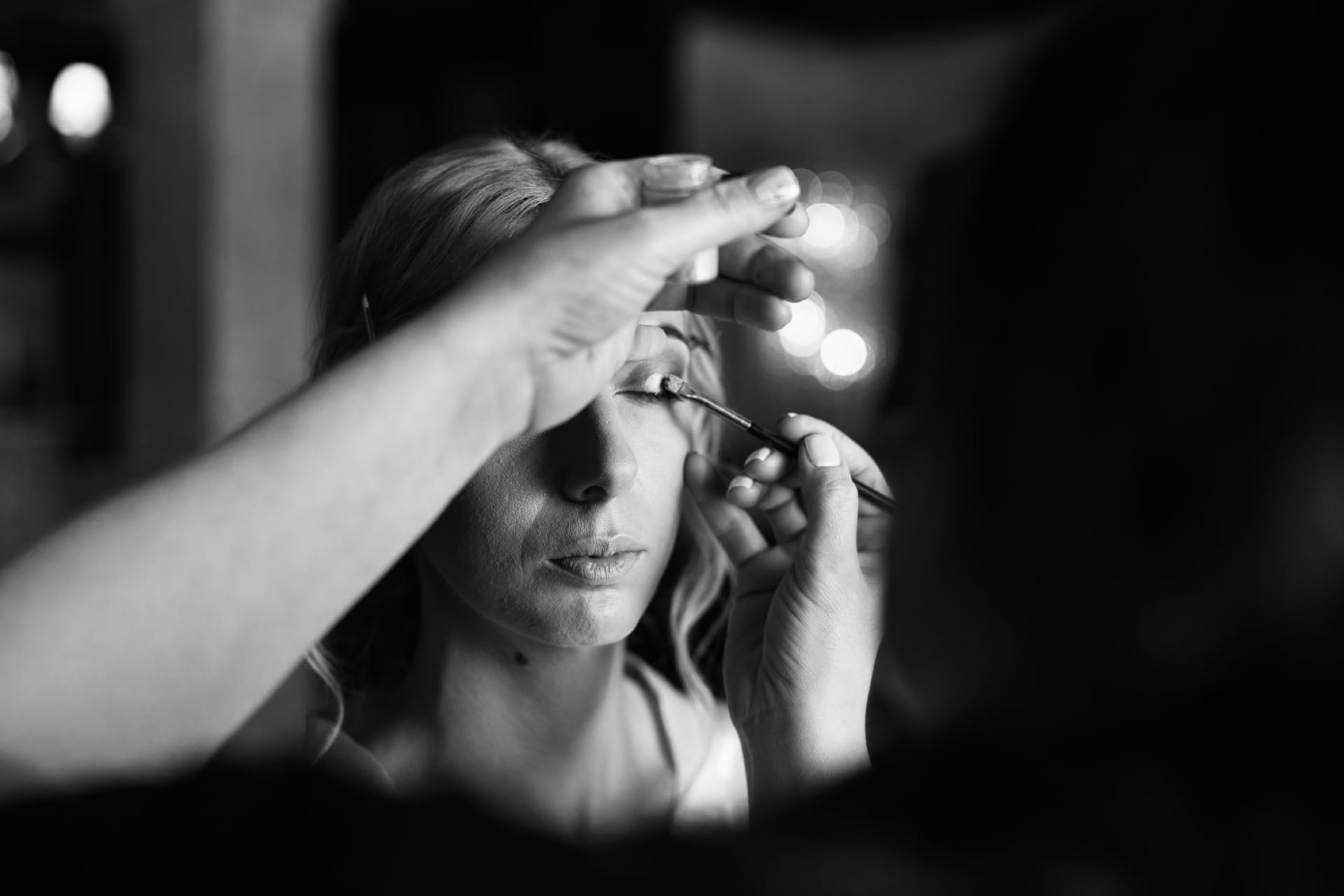
Lesson two: your camera has to be quiet. It's not just about the shutter (mirrorless, silent mode — essential). It's about motion. I don't lift the camera to my eyes sharply. I don't change lenses theatrically. I don't fire three frames in a row when one is enough. Silence is a technique you learn slowly — most photographers call it intuition, but it's discipline.
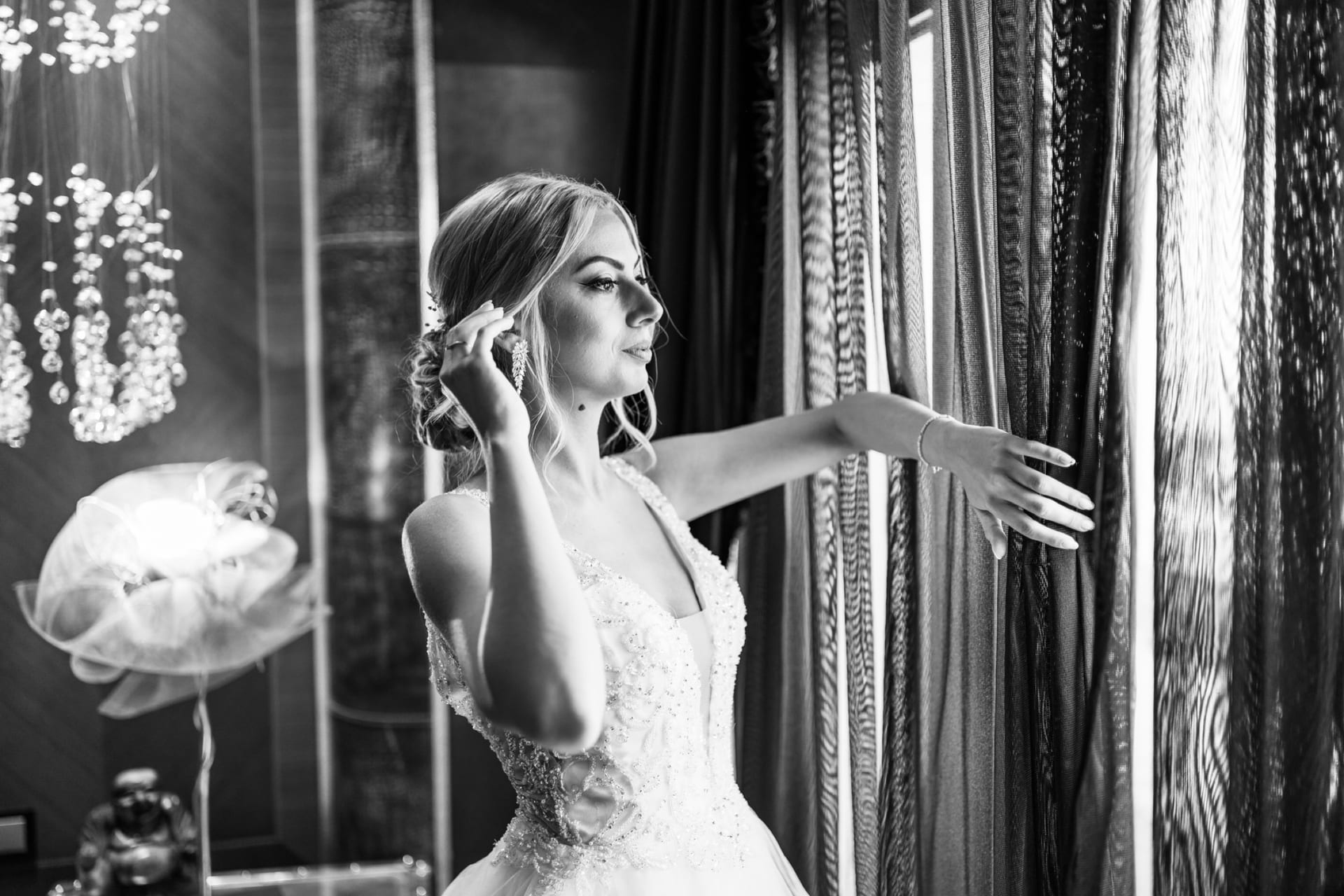
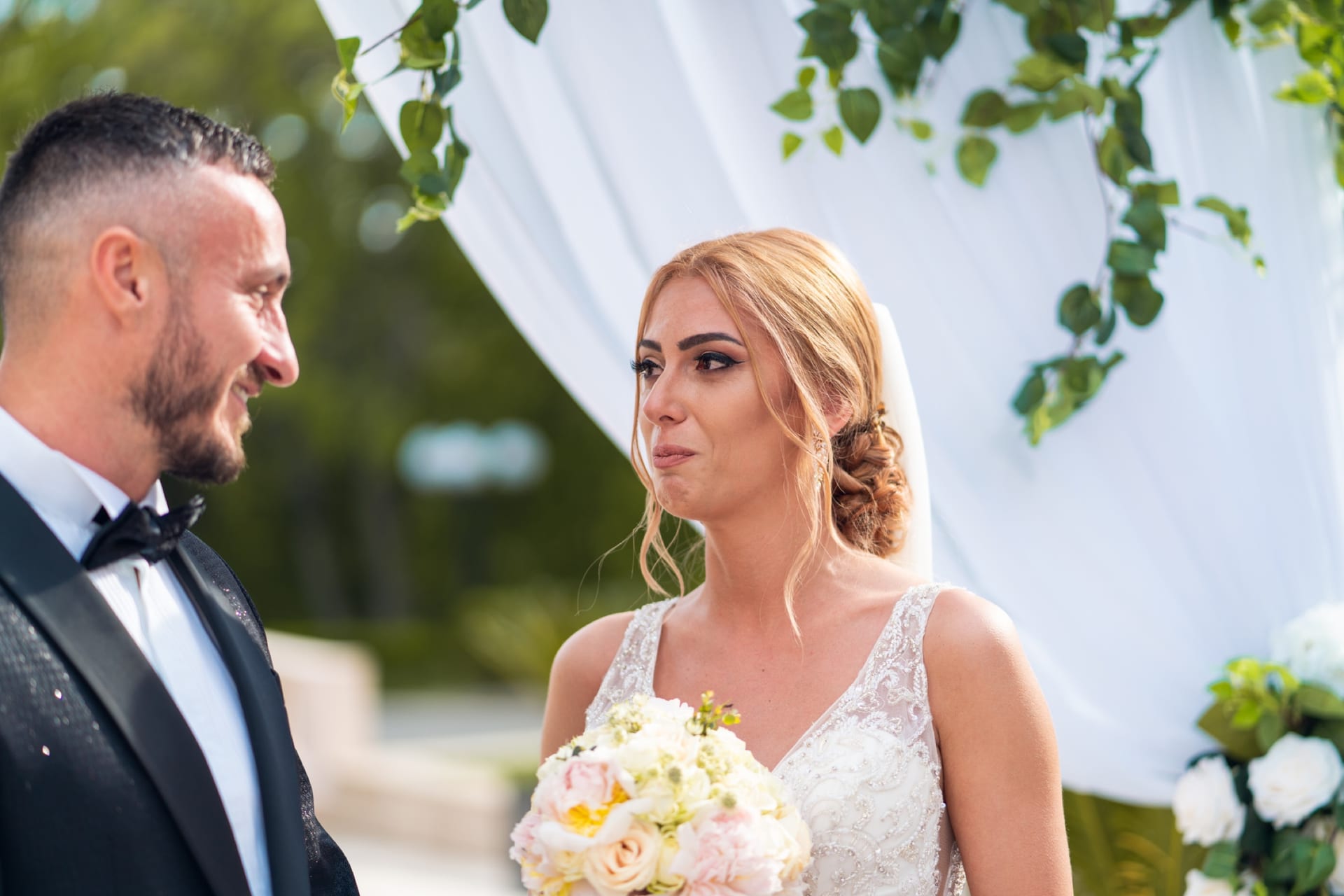
At Iren and Ivan's, there was a moment near the end of the ceremony — they were standing under the arch, she was looking at him. I was ten meters away, sitting. Waiting. When she briefly broke from a tear, I took one frame. Only one. I didn't reshoot — because you can't reshoot a tear.
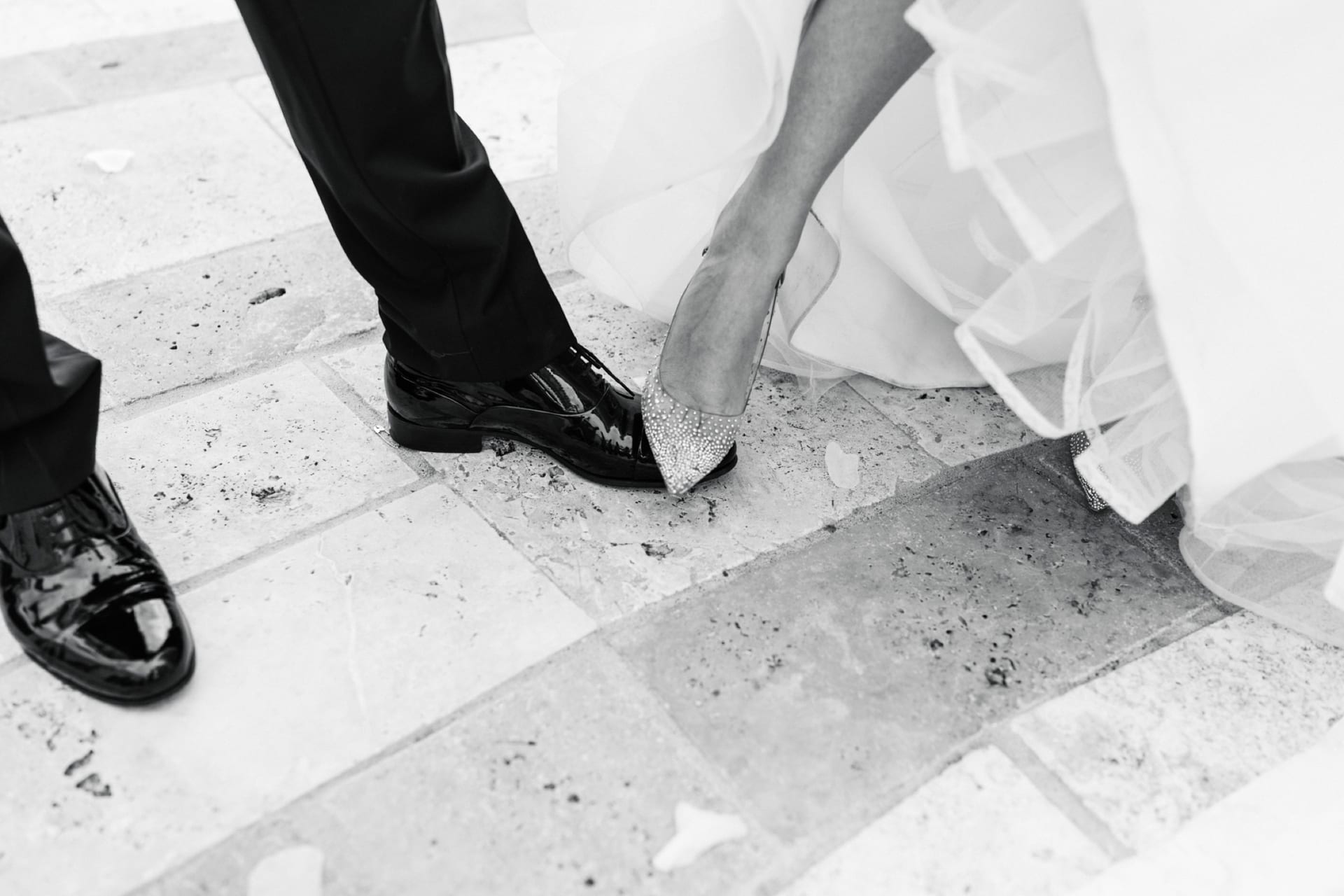
Lesson three: sit down. Literally. The height of your body changes how people react to you. When you stand upright, you're an observer. When you sit on the floor or crouch by a table, you become part of the landscape. Guests will speak honestly in front of you. Children will play around you. The bride will tell you the truth.
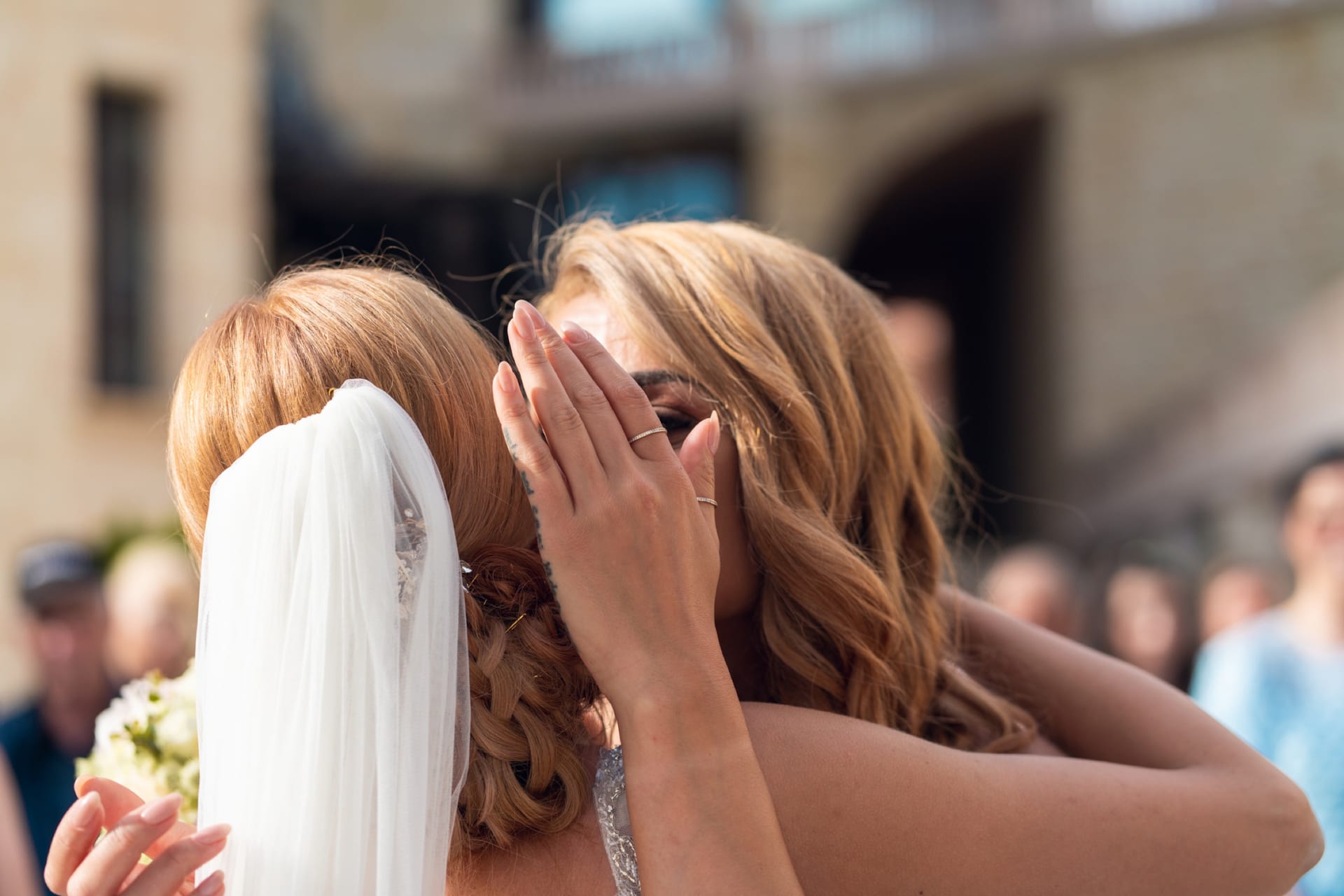
The wedding as film doesn't mean shooting it cinematically. It means eavesdropping on it — the way a director eavesdrops on rehearsals before calling action. The frames come on their own, once you've learned to wait.
There's one frame from Dimitar and Desi's summer wedding I still look at sometimes. She had just learned her grandmother wouldn't make it. She was sitting on the stairs, alone, the bouquet in her lap. I was at the top of the staircase. I didn't think — I took the frame, because I knew there wouldn't be another like it. I never take a second try at moments like that. They either happen, or you've missed them.
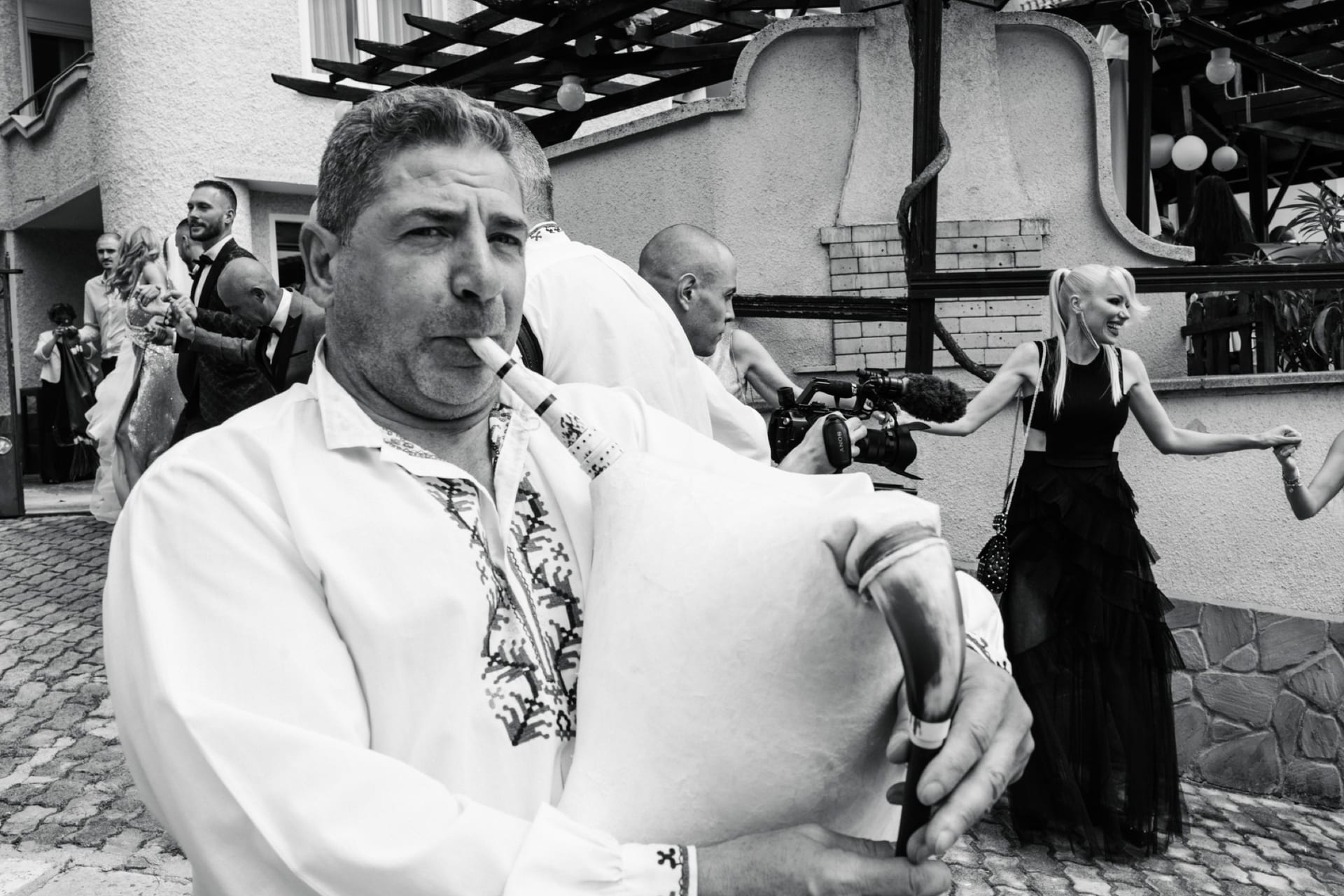
That's the wedding. And that's why I love to shoot it.
Ready to plan?
See what the packages include and where the prices start.