Christening
A Christening in the Sea by the Church of the Dormition in Tsarevo
In this article
- From the silence of the church to the open sea
- The Church of the Dormition in Tsarevo — a place with its own presence
- The procession to the sea
- The moment the priest stepped into the water with the child
- Christening in the water — when the sea is not a backdrop
- How I shoot in and by the water
- The splashes, the light and the unrepeatable moment
- Safety matters more than the frame
- The strongest frames aren't always the loudest
- Why I don't direct the real ritual
- Christening in Tsarevo and along the southern Black Sea coast
- Christening in the sea — frequently asked questions
- A story that stayed with me
There are events you photograph. And there are events that stay with you. This christening in Tsarevo was the second kind.
It began in the Church of the Dormition of the Most Holy Mother of God („Sveto Uspenie Bogorodichno“) — among the stone walls, the muted light, the candle flames and the quiet tension of a family before an important moment. And then the story stepped out of the church and continued toward the sea.
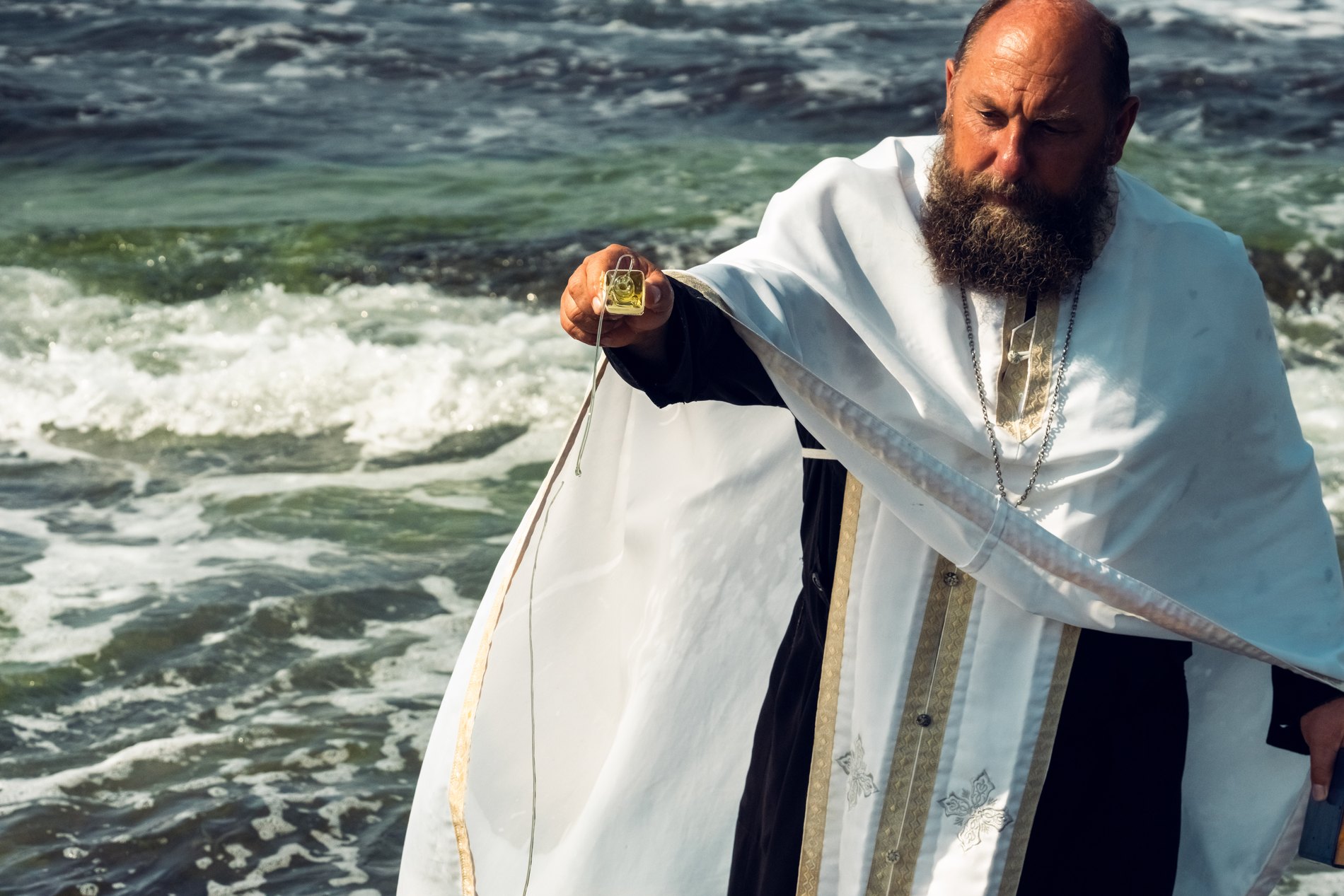
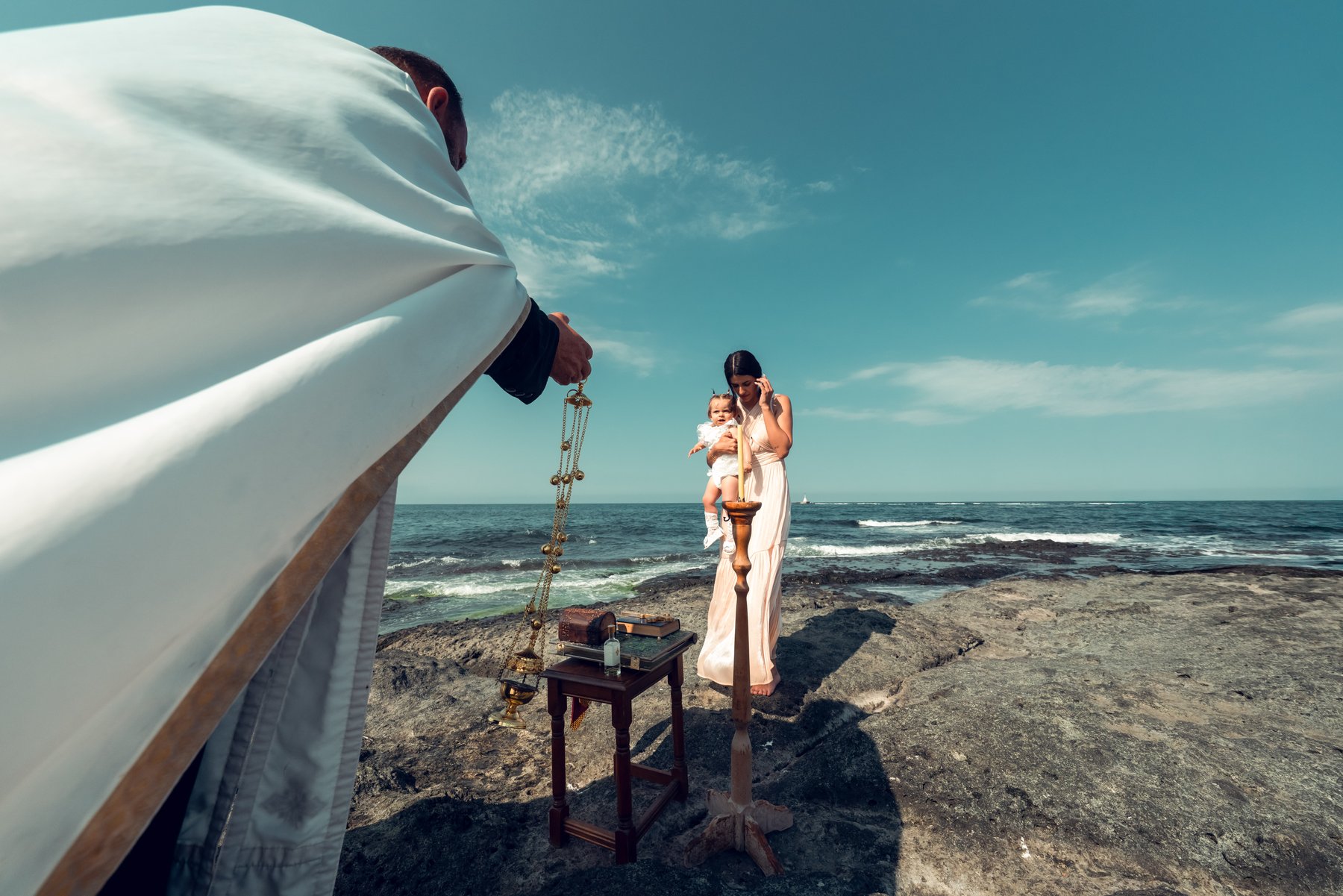
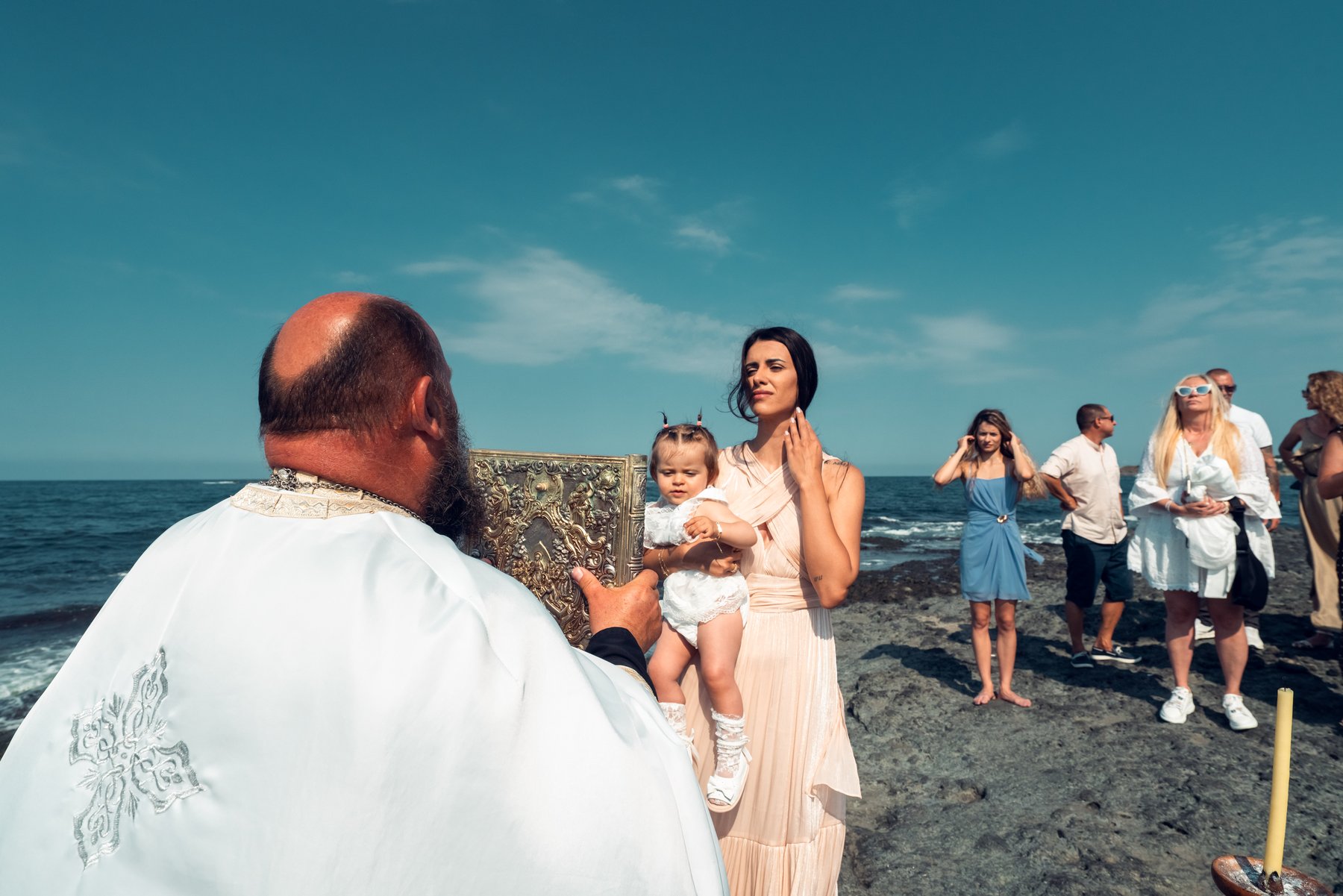
Not symbolically. Not just for a few frames by the shore. The christening itself continued in the water. The priest walked into the sea with the child. The family stayed by the shore and on the rocks. The wind, the water, the light and the movement became part of the ritual.
For me as a photographer this was one of those rare stories where you cannot separate the place from what is happening. The church, the procession, the sea and the family were not separate scenes. They were parts of one and the same story.
From the silence of the church to the open sea
It started in the Church of the Dormition („Sveto Uspenie Bogorodichno“) in Tsarevo. In an Orthodox church a photographer enters a space with its own rhythm. There I don't decide when someone stands, when they turn, or when the light is convenient for a frame. The ritual has its own course and my job is to follow it without disturbing it.
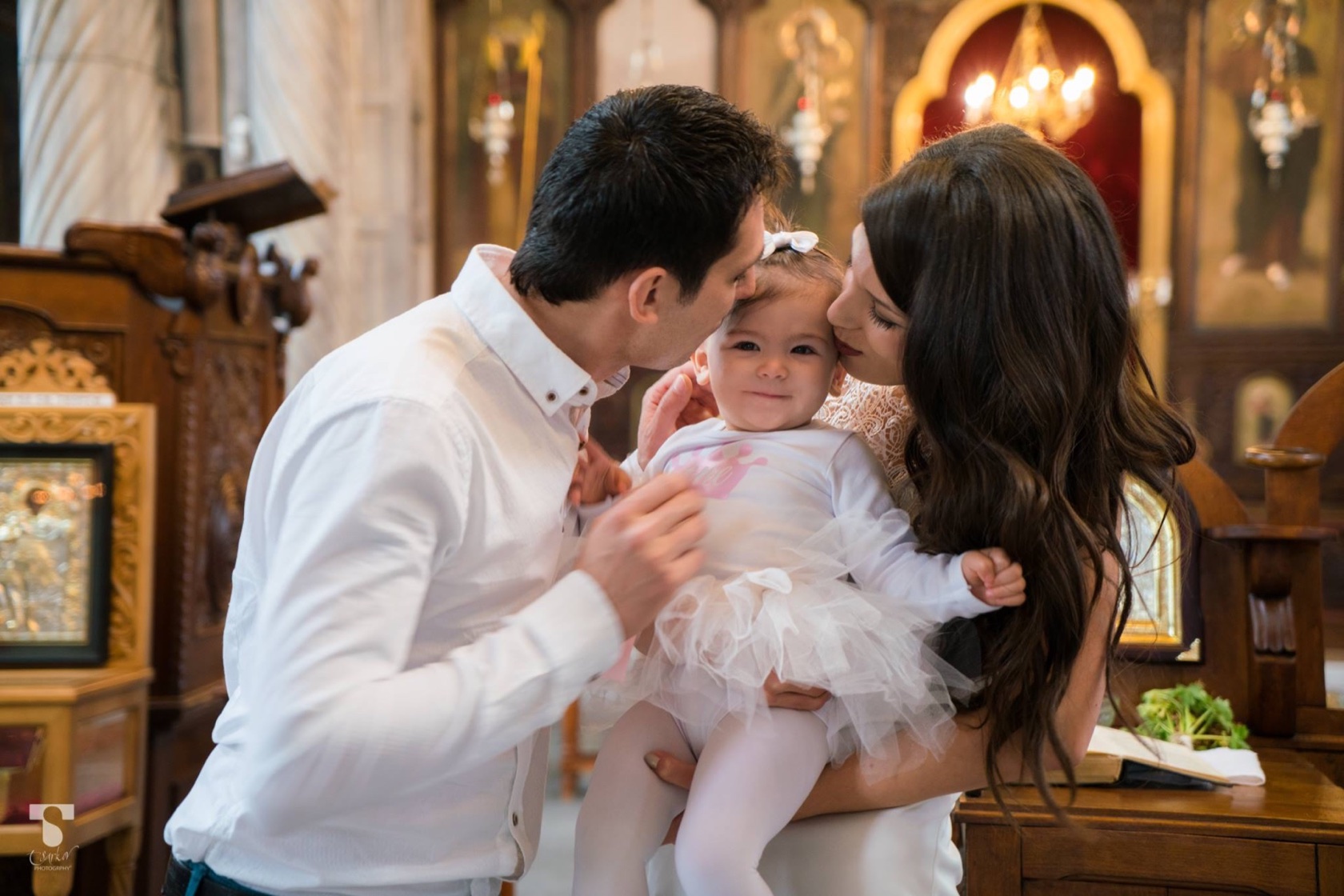
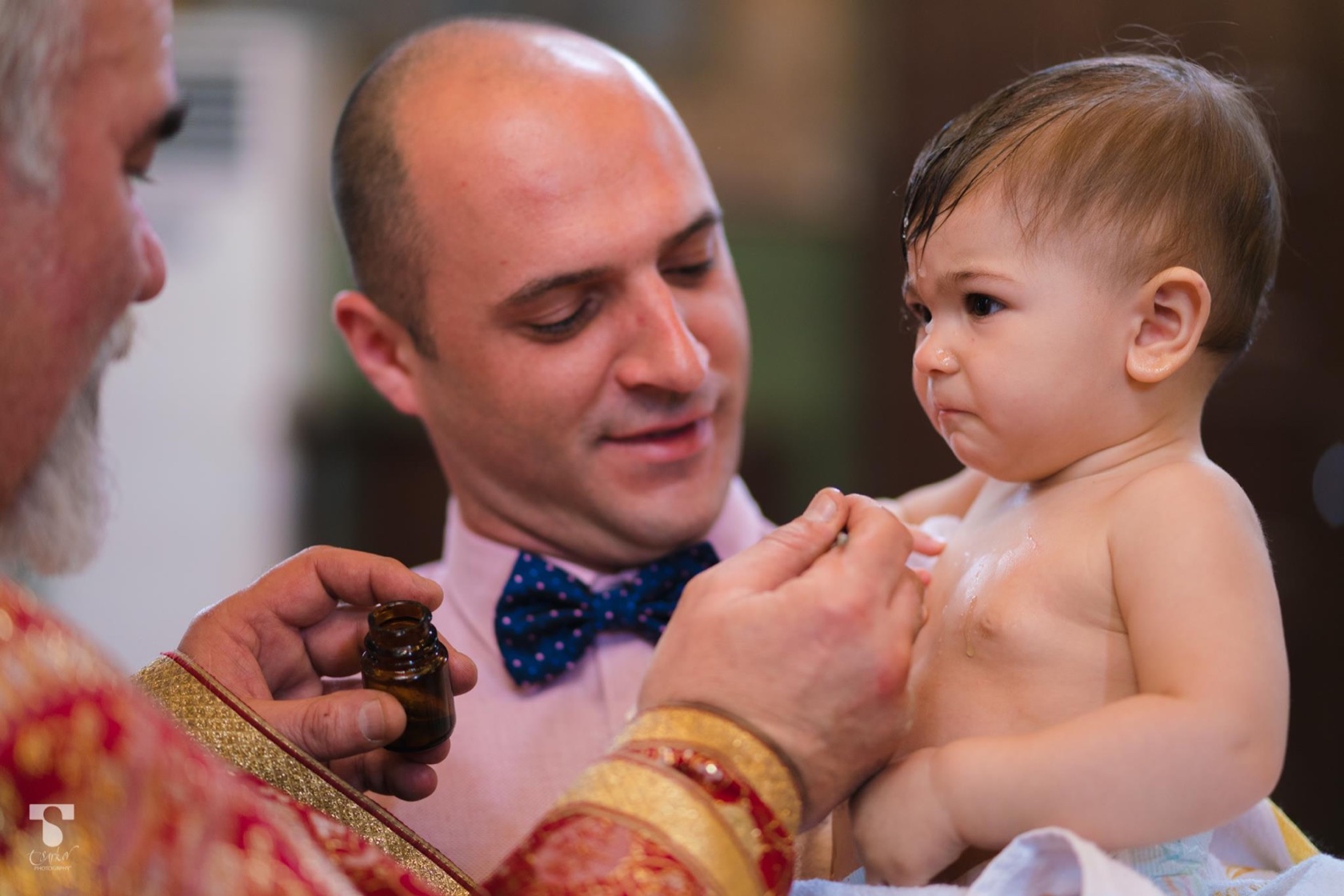
The light inside is unlike anything that follows — more muted, deeper, sometimes technically difficult, but extraordinarily strong as atmosphere. It is in such an environment that small gestures start to matter: a hand on a shoulder, a look between the parents, the flame of a candle, the priest's movement, the child in the arms of loved ones. These are moments I don't direct. I watch them. And I wait.
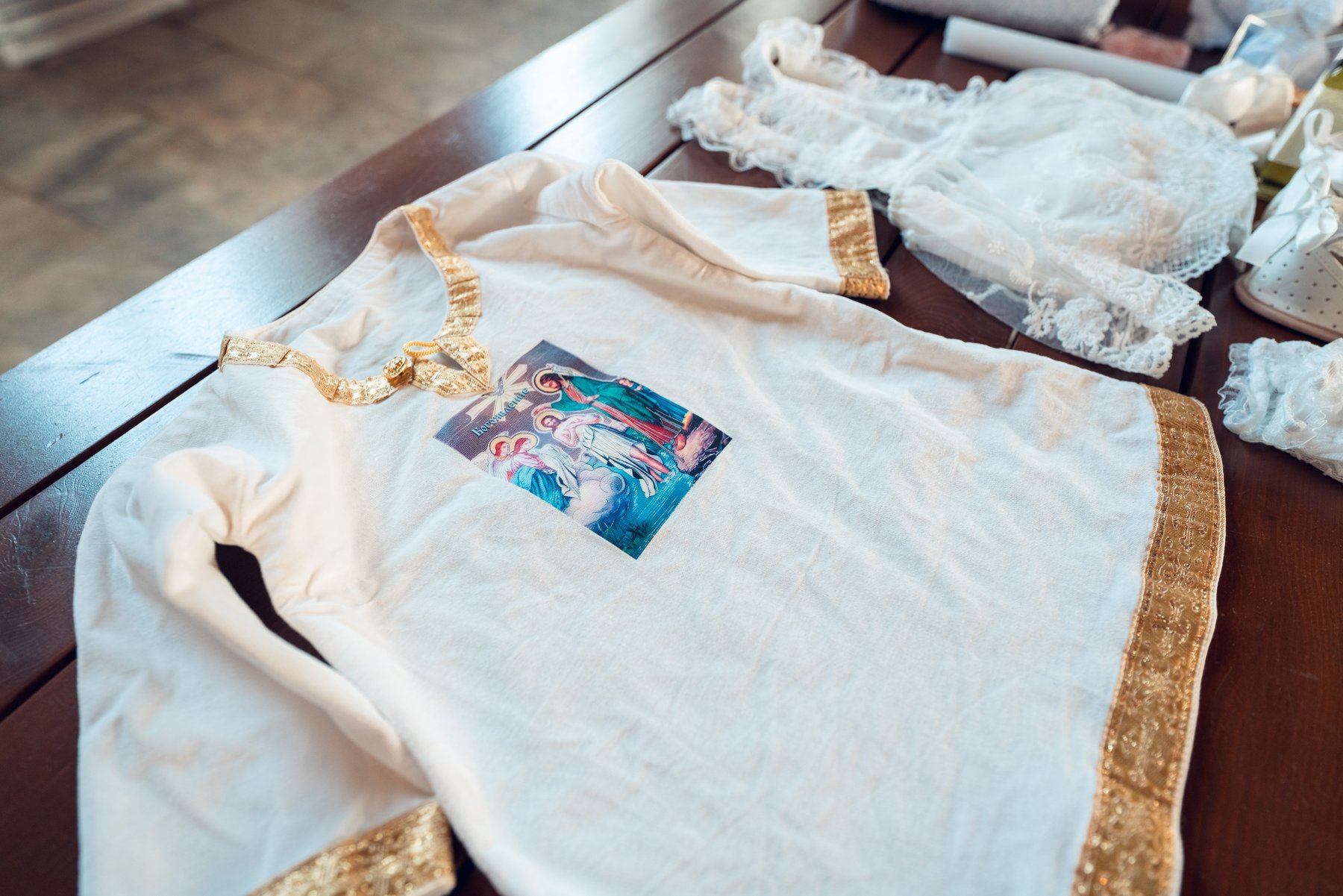
The Church of the Dormition in Tsarevo — a place with its own presence
Some churches impress with size. Others with decoration. Here, for me, the strength is in something else. The connection between stone, Orthodox tradition and the closeness of the sea creates a feeling that is hard to repeat anywhere else. When you photograph a real family ceremony here, the church doesn't remain a mere architectural backdrop. It is the beginning of the story. And the sea is its continuation.
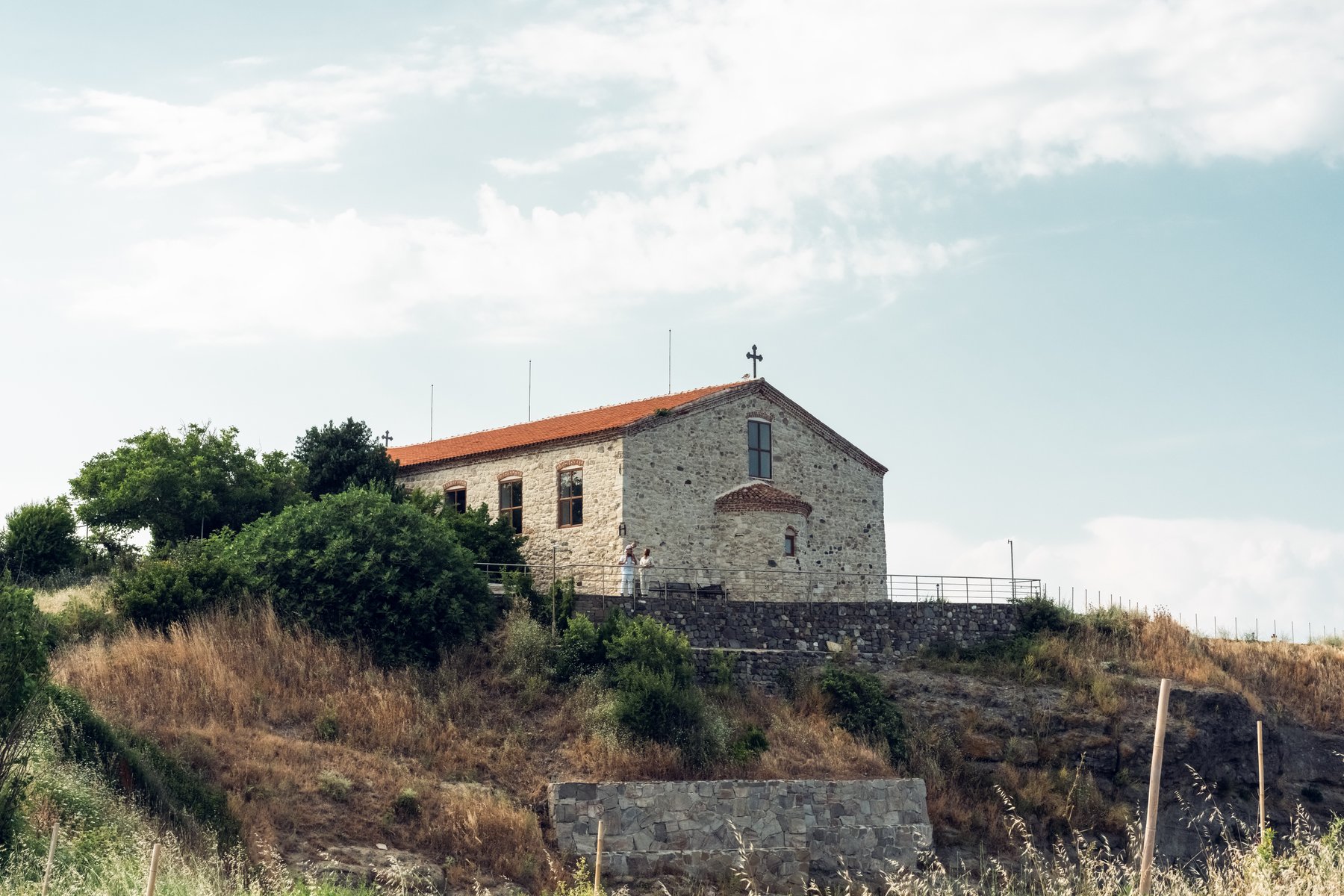
That very change of setting was one of the strongest things about this christening — from the muted light inside to the open sky, from the silence of the stone walls to the wind and the movement of the water. As a photographer I could feel the visual language of the event changing in front of me.
The procession to the sea
After the church, everyone headed for the shore. This is a moment easily missed if you think only about the “big frame” of the ritual itself. For me, though, the transition mattered just as much. The family walks together, the priest leads, people move between the stone and the sea. Anticipation builds, because everyone knows something unusual is about to happen.
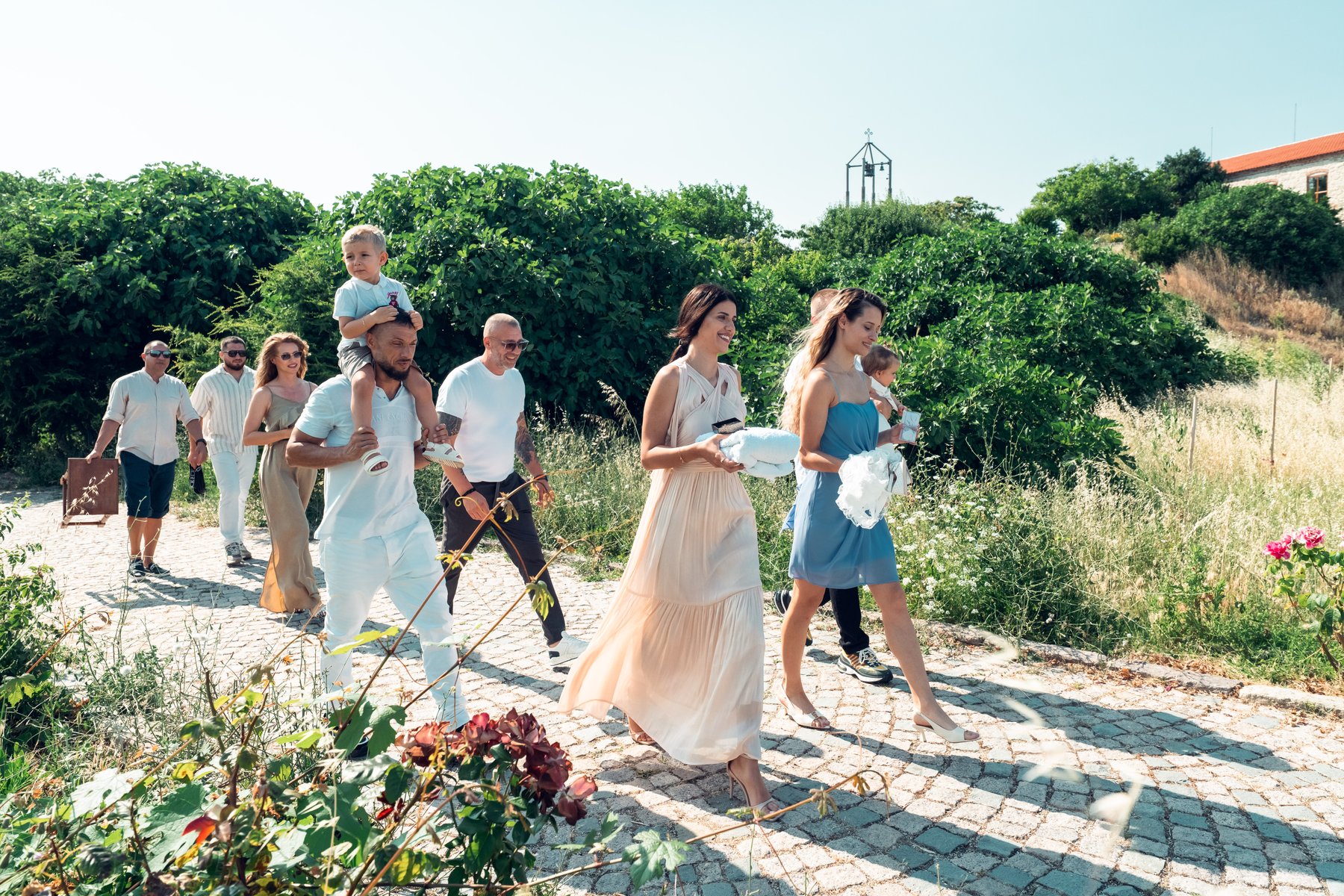
In moments like these I don't ask people to stop and line up for the camera. I move with them. I look for the glances, the gestures, those seconds between the “official” moments when a person forgets someone is photographing them. Because very often that is where the real story is.
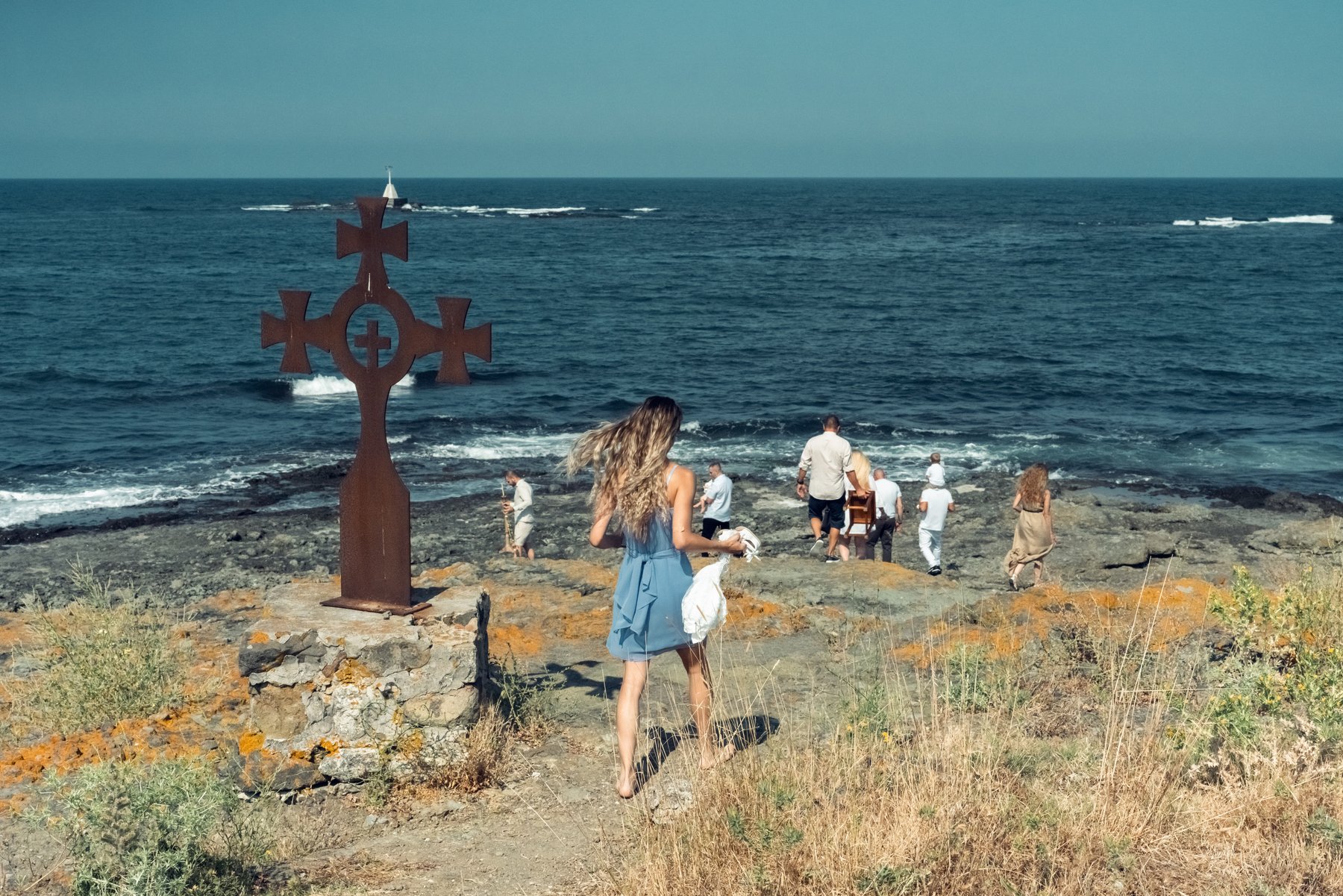
The moment the priest stepped into the water with the child
This is the moment I remember most vividly. By then I had already photographed the church, the family, the ritual, the movement and the procession to the sea. But when the priest walked into the water with the child, the atmosphere changed completely.
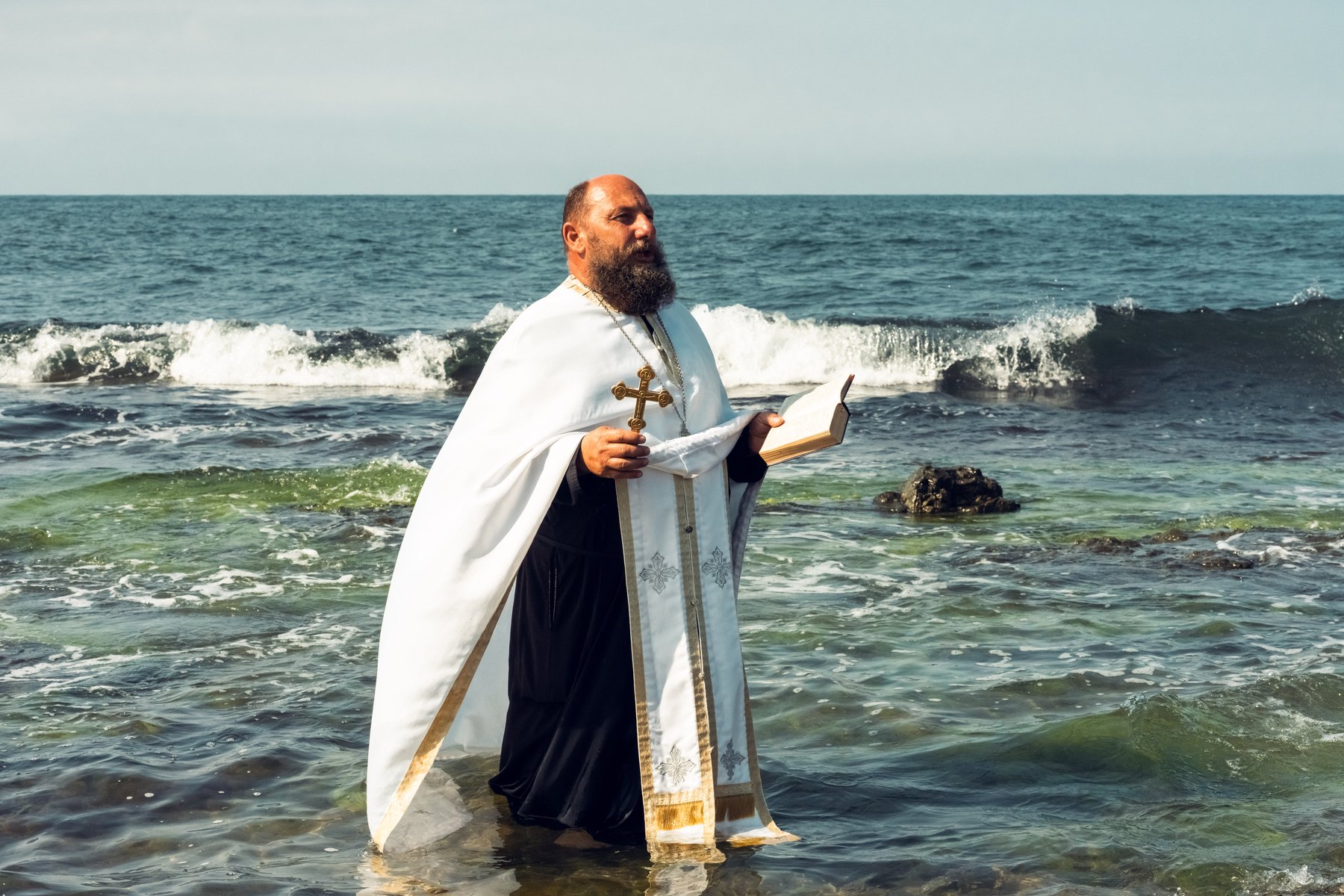
Suddenly everything began to happen at once. The water was moving. The light reflected off the surface. There were splashes, wind, the reactions of the loved ones — and one small child in the priest's arms.
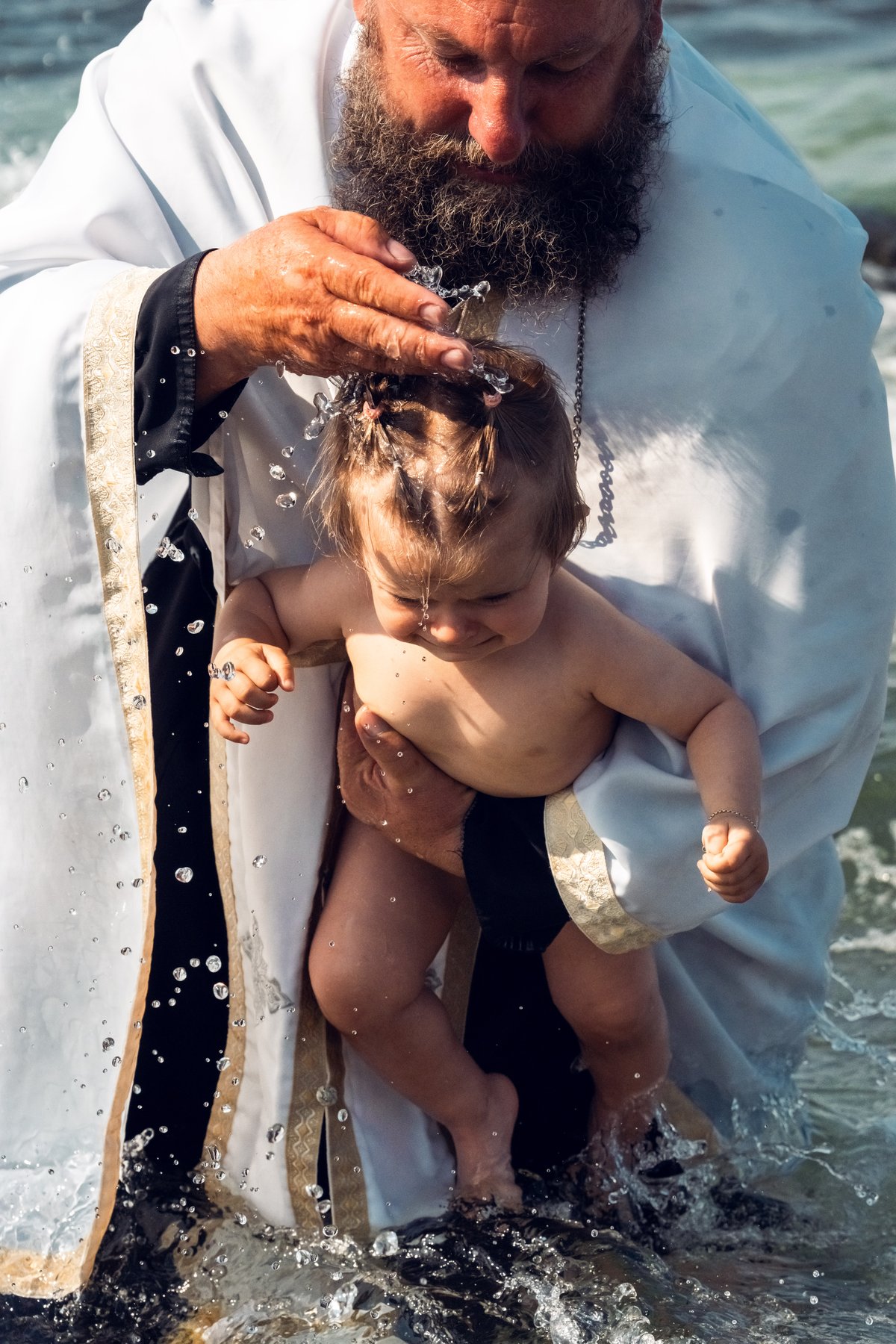
There was no second take. No “let's do it again.” No chance to stop what was happening and ask someone to move half a metre to the left for a better composition. And that is exactly why the moment was so real.
Christening in the water — when the sea is not a backdrop
In many shoots the sea is a beautiful setting. Here it wasn't. Here the sea was part of the event itself. Water changes everything — the movement, the light, the reflections, the way fabric sits on the body, people's reactions, and the speed with which a moment disappears.
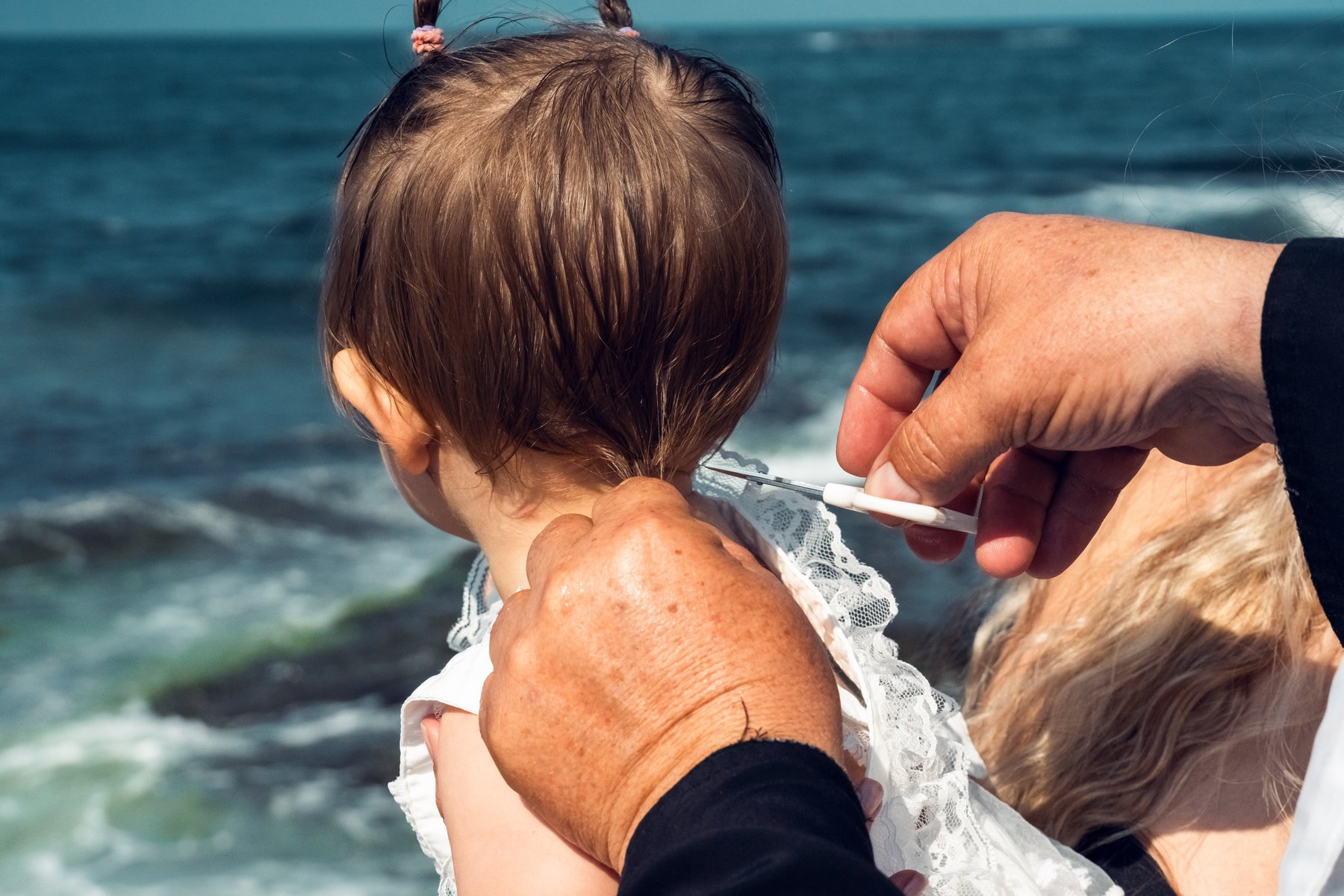
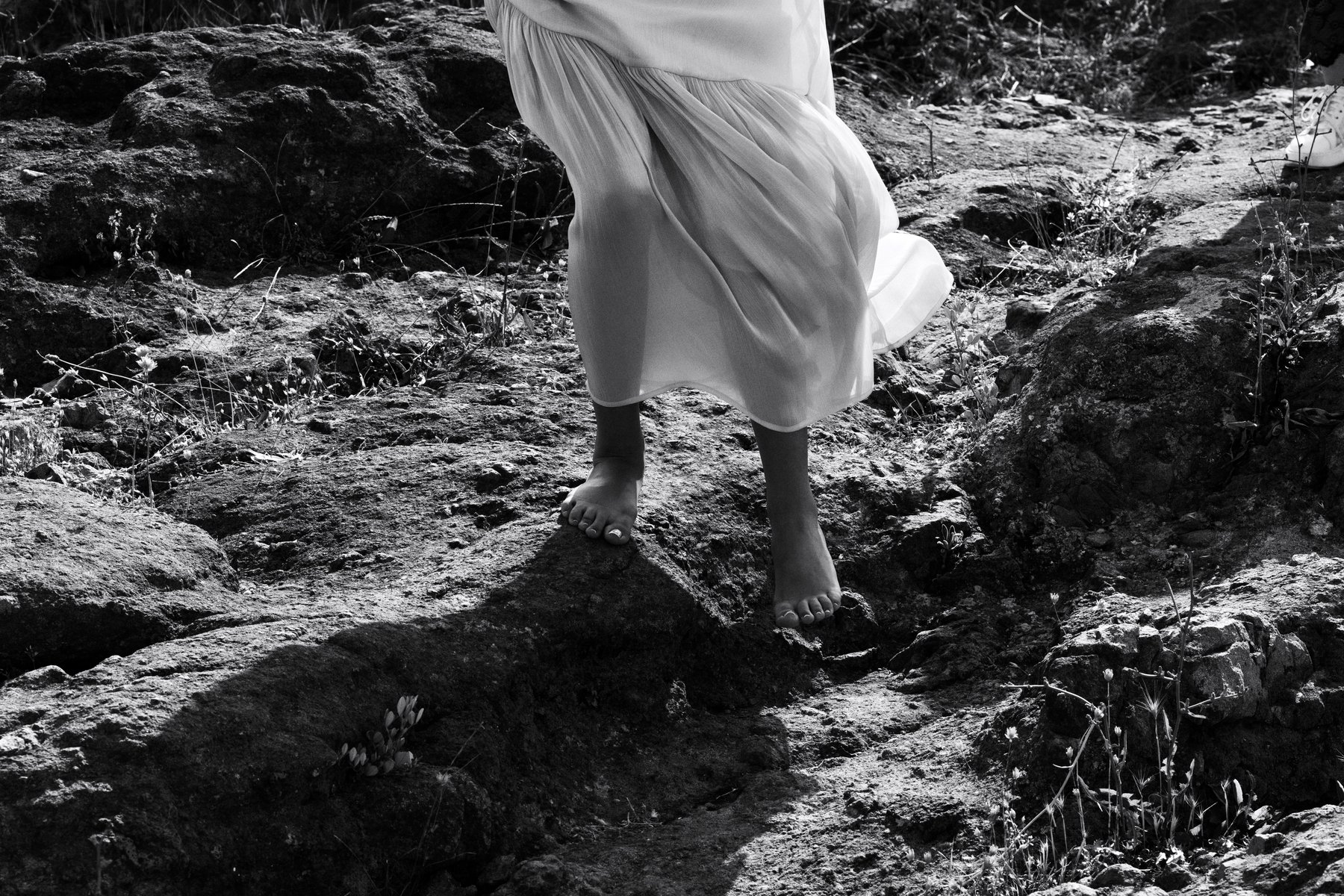
A splash exists for a fraction of a second. A look can be just an instant. A parent's reaction won't repeat the same way. When I shoot a scene like this, I don't try to control the sea — I watch it and work with it. Splashes are not a defect to be removed. Wind is not necessarily a problem. Wet clothes, reflections and the movement of the water are part of the truth of that day.
How I shoot in and by the water
A christening like this demands a different approach from a standard shoot. Above all, I watch. Where is the priest moving? Where is the family? How are the waves coming in? Where is the light falling from? Where can I stand without getting in the way? I try to anticipate the next few seconds, because in a real ritual the moment doesn't wait for the photographer.
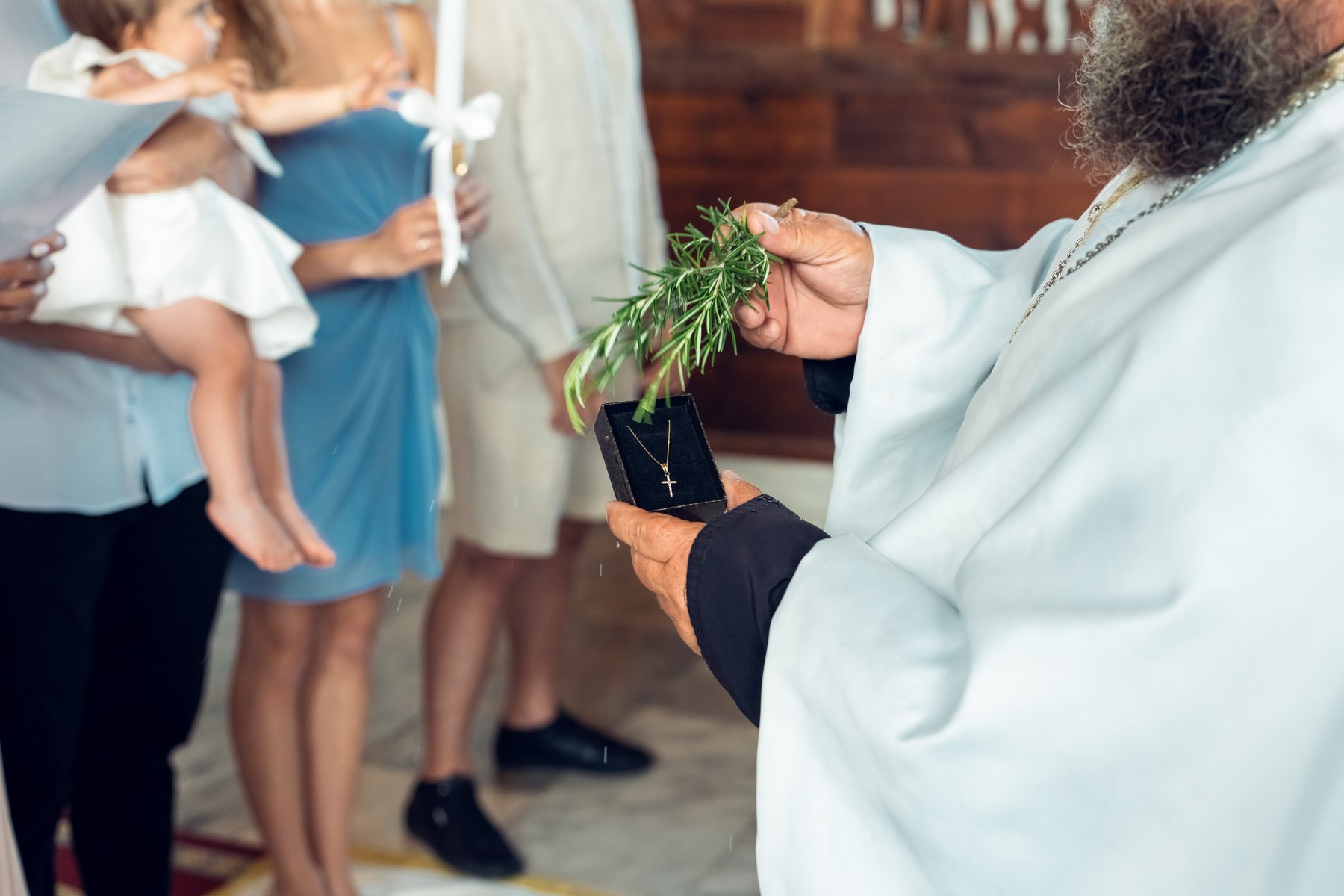
When the water is moving, the light can change extremely fast. Light-coloured clothes can easily lose detail, faces can fall into shadow, a reflection off the sea surface can change the whole frame in an instant. So I don't rely on a single setting and I don't shoot mechanically. I react constantly. I track the brightest parts of the scene, I track the movement, I track the hands, I track the faces of the loved ones — because sometimes the strongest frame is not the action itself, but the reaction of someone watching it.
The splashes, the light and the unrepeatable moment
There is something special in the way water looks in a photograph. When splashes catch the light, they can create a sense of movement that cannot be convincingly staged. But to capture such a moment you have to be ready before it happens. Not after.
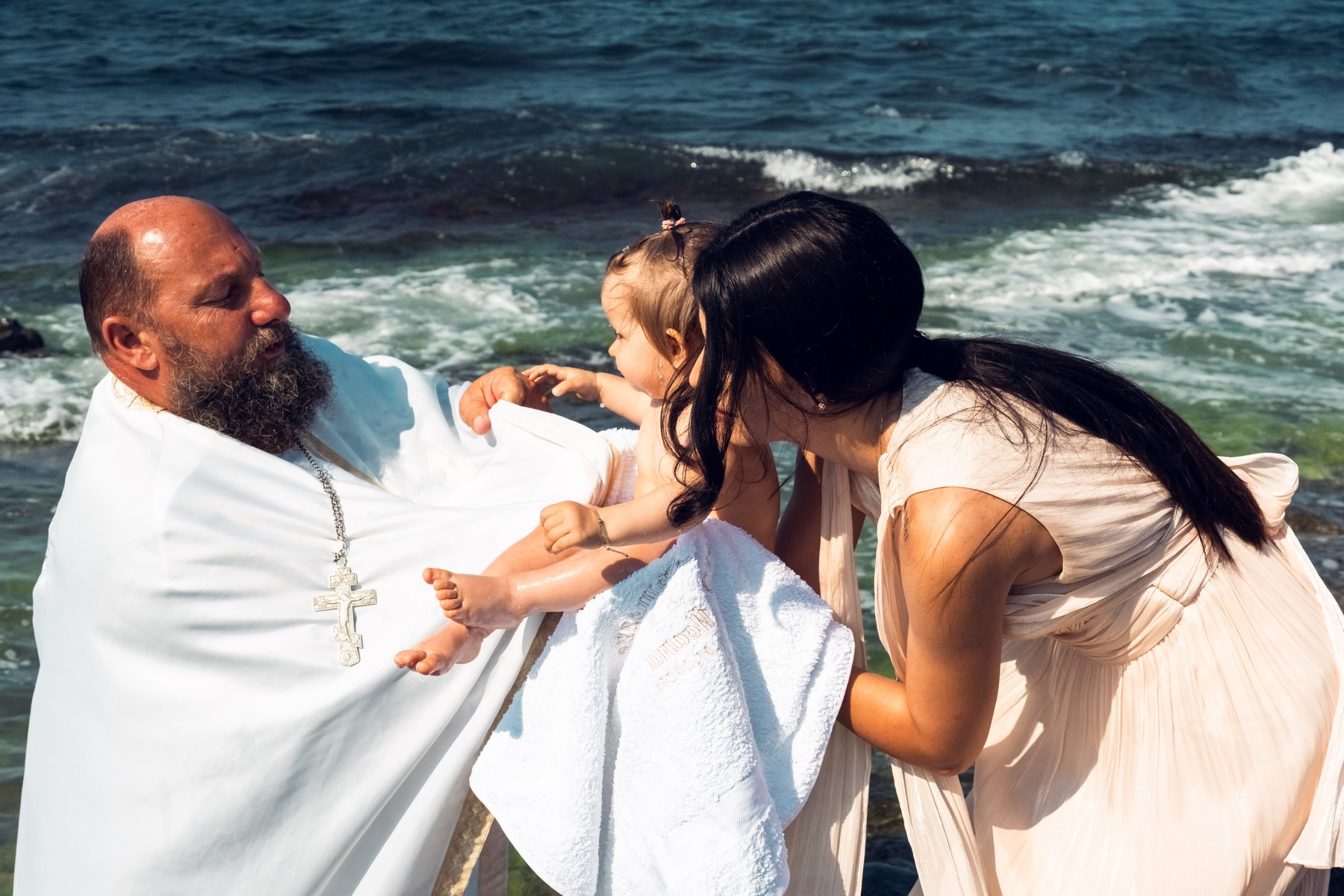
This is one of the reasons I love the documentary approach to photography. The strongest frames often come not when everything is perfectly arranged, but when reality, for a fraction of a second, creates something no one planned. My job is to see it in time.
Safety matters more than the frame
When I shoot around water, wet rocks and moving people, there is one rule that stands above everything:
No photograph is worth creating a risk.
I don't step recklessly backwards with a camera to my face just to chase a composition. I don't stand where I could get in the priest's way. I don't ask the family to repeat a movement in the water for a “better frame.” I choose my position in advance as much as the situation allows — I watch the terrain, I watch the waves, I leave room for the ritual. A photographer must be close enough to tell the story, but careful enough not to become part of it.
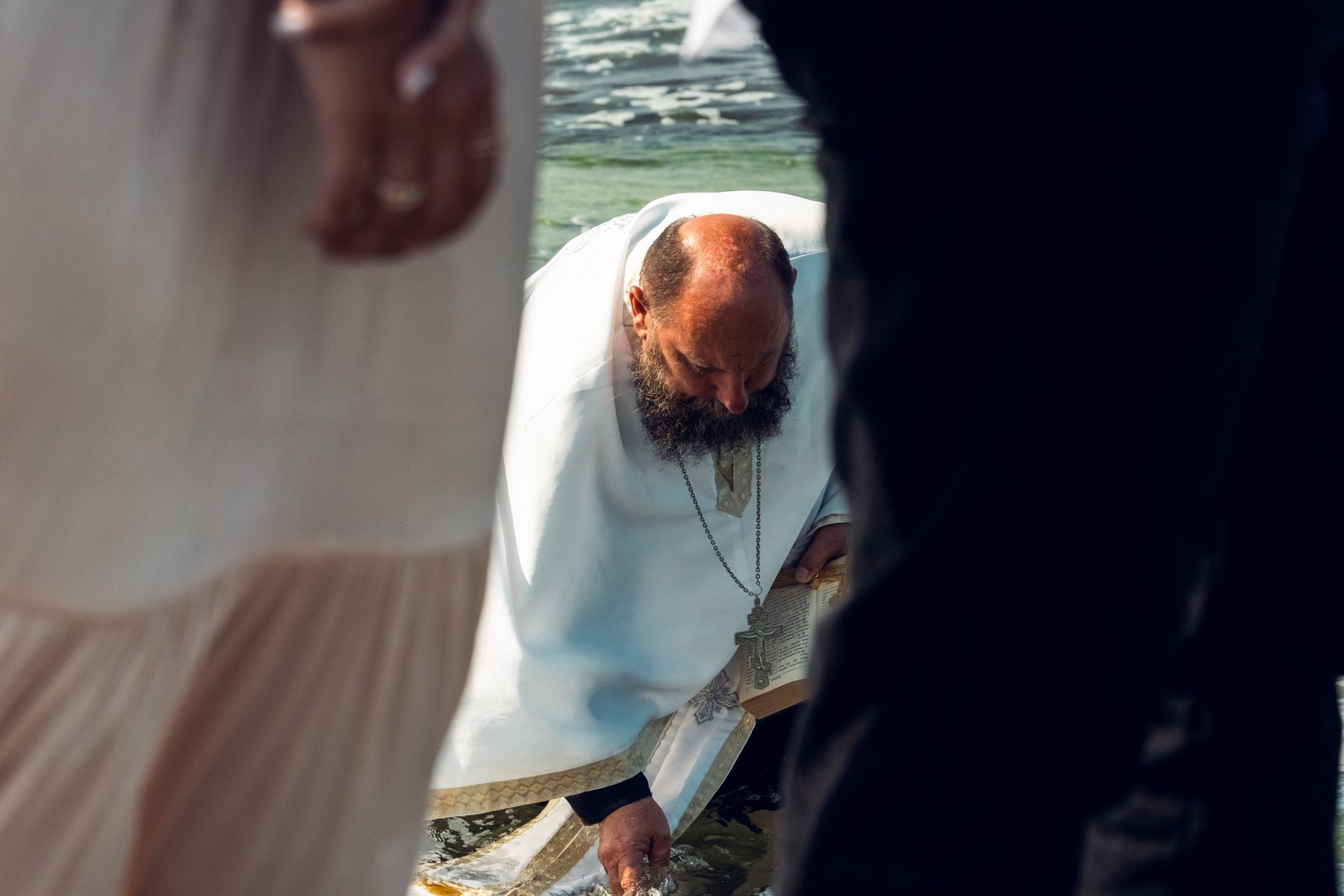
The strongest frames aren't always the loudest
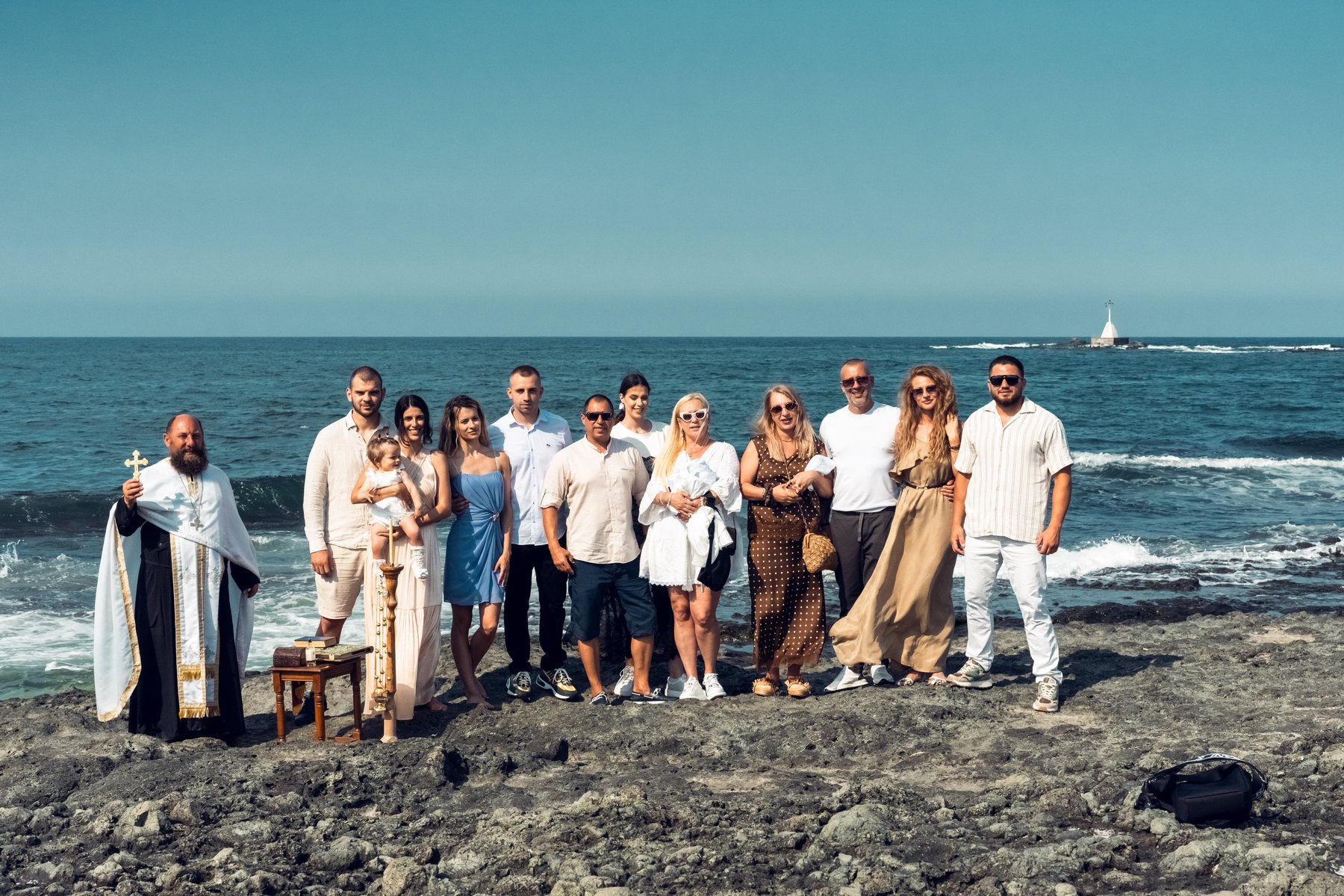
After the moment in the water came another scene that stayed with me. The baby, wrapped in white. The family. The rocks. The sea behind them. After the movement and the splashes a different feeling set in — quieter, more collected, almost a visual epilogue to everything that had happened before.
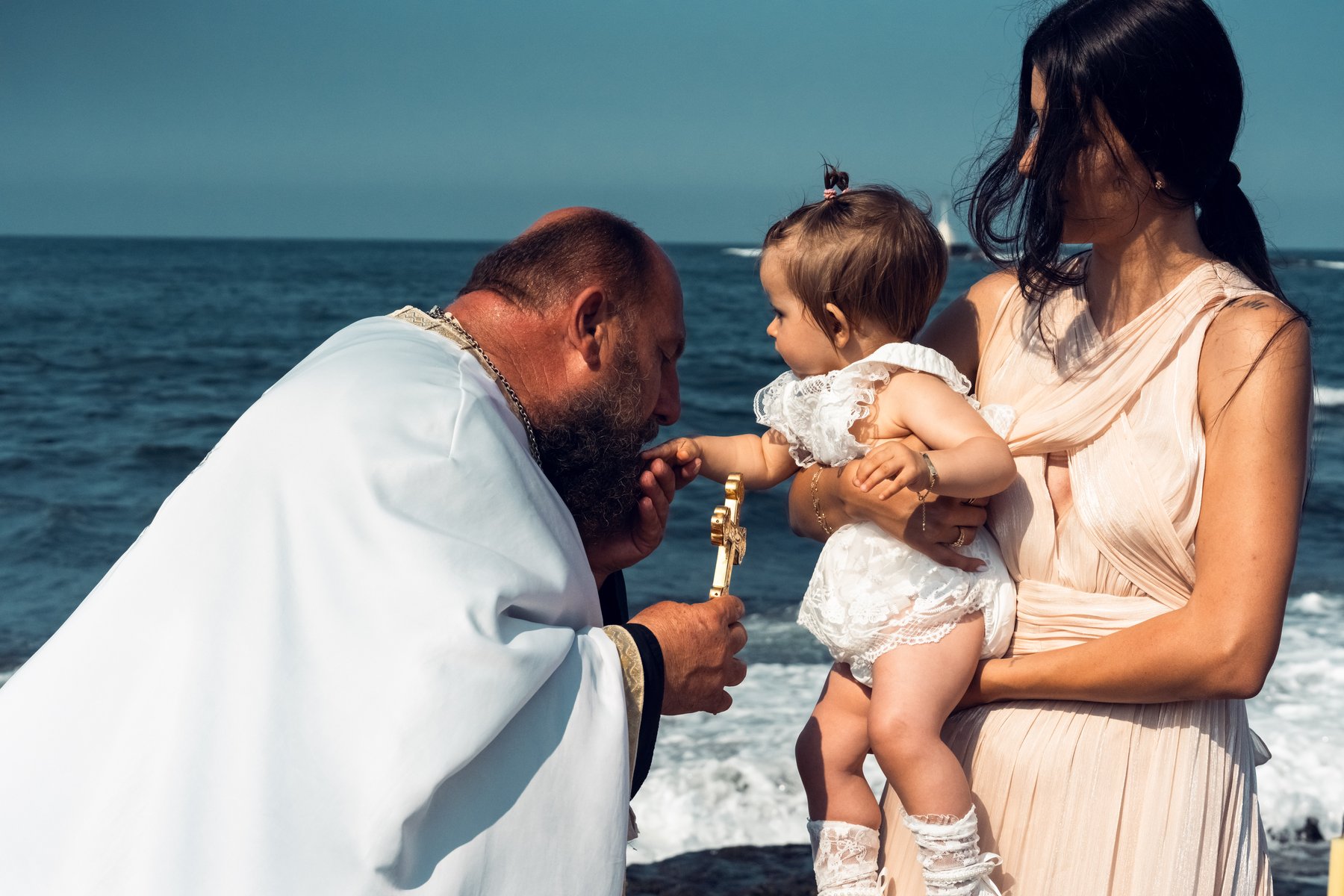
That was when I realised I wasn't just photographing separate beautiful moments. I had a whole story — from the darkness and silence of the church, through the procession, to the water and then back to the family.
Why I don't direct the real ritual
At a christening my task is not to turn the ceremony into a photoshoot. I don't want the priest to wait because of me, I don't want the parents thinking about where the camera is, I don't want the child moved for more convenient light. I want the family, years later, to look at the photos and remember what actually happened.
Of course, after the ritual itself we can make family portraits — use the sea, the rocks and the light, take time for calmer frames. But during the christening itself my approach is documentary. I watch. I anticipate. And I protect the moment.
Christening in Tsarevo and along the southern Black Sea coast
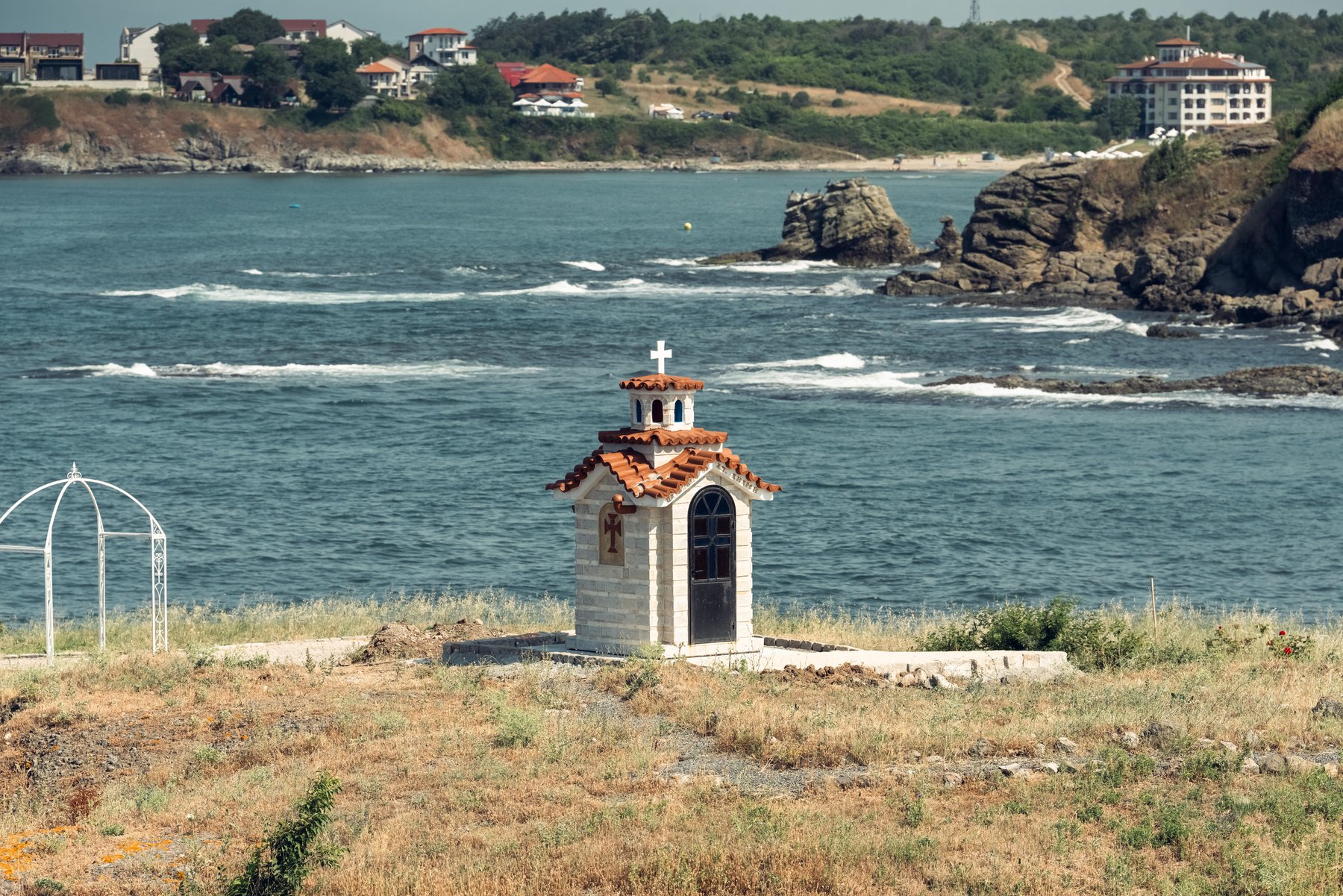
The southern Black Sea coast has places of very different character. But Tsarevo carries a special feeling when a family ceremony connects the Orthodox church with the sea. This is not just a “beautiful seaside location.” For me the strength is in the contrast — stone and water, silence and movement, muted light and open horizon. When these elements are part of a real event, the photography gains something that cannot be created with props or direction. It gains memory.
If you're planning a christening along the southern Black Sea coast, see my christening portfolio and browse the christening packages and pricing. If you already have a date and a church, write to me — I reply within 24 hours.
Christening in the sea — frequently asked questions
Do you photograph christenings in Tsarevo?
Yes. I photograph christenings and family events in Tsarevo and along the southern Black Sea coast, with an approach tailored to the specific church, ritual and the family's plan.
Can photos be taken during the christening itself?
That depends on the specific church, the priest and the rules of the place. I always approach the service with respect and never assume that a photographer is free to move anywhere.
Do you use flash inside an Orthodox church?
My approach depends on the specific environment and the rules of the place. When possible, I prefer to preserve the natural atmosphere and work discreetly, without turning the service into a photoshoot.
Do you also shoot after the ritual?
Yes. After the ceremony we can make family portraits and calmer frames in a suitable spot, including by the sea, if conditions and the schedule allow.
What happens in strong wind?
I don't try to fight the weather. I change my position, the angle and the way I shoot. Sometimes the wind creates movement and very strong frames; other times I look for a more sheltered spot.
What if the weather turns bad?
Overcast weather is often excellent for portraits. In rain we work with the specific situation — the church, a covered space, short breaks between showers, or a change in the timing of the outdoor photos.
Can we take photos by the sea after the christening?
Yes, if the place, the time and the schedule allow. For me it's important that this be a natural continuation of the day, not an obligatory staging.
A story that stayed with me
When I look back through these photos, I don't see just a christening. I see the beginning in the church, the people walking together toward the sea, the priest in the water, the splashes, the child, the family on the rocks. And I see that rare moment when the place, the light, the people and the event line up into a story no one could ever repeat the same way. It's for moments like these that I photograph.
Ready to plan?
See what the packages include and where the prices start.